Where to Donate Used School Bags: Who Takes Them and Who Only Wants New
By Chester Takau · October 2026
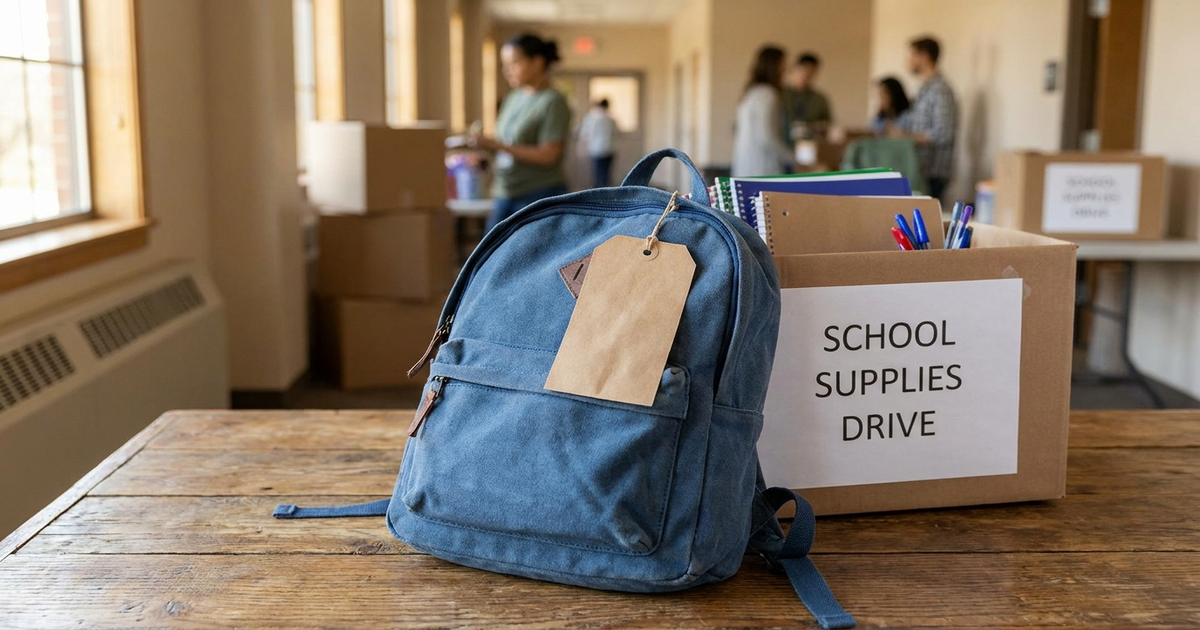
The best places to donate used school bags are women's and homeless shelters, foster-care programs, reuse networks and your school district's McKinney-Vento (homeless student) liaison. Most back-to-school drives are the wrong place to go, because they take new bags only. Toronto's TDSB says it can accept only new items "due to health, safety, and storage considerations," and Chicago CAC, FamilyWorks Seattle and El Paso's Bags 2 School make the same call. Bring a bag that is clean, has no rips and has working zippers, and phone ahead before you drop it off.
Chester Takau writes about sustainable school gear from a Pacific-Island perspective, decoding eco-certifications so buyers can tell real claims from greenwashing.
This is a research piece, not a field test. I haven't dropped bags at these places myself, so everything below comes from the cited pages, and anything I couldn't confirm is marked.
Which places take used bags, and which want new ones only?
Nobody seems to sort donation options this way, and it is the thing that trips donors up. Here is the split based on the sources I found:
| Where | Condition wanted | What the source says |
|---|---|---|
| TDSB, Chicago CAC, FamilyWorks Seattle, El Paso Bags 2 School | New only | TDSB cites health, safety and storage. Chicago CAC takes no used items. FamilyWorks asks for "new, unused condition." |
| Some foster programs (e.g. Friends of Adoption and Foster Care) | New only | Fills only new backpacks, for dignity reasons. |
| Hillsborough County Duffels of Dignity, Youth Ranch (Idaho) | Gently used | Duffels of Dignity accepts gently used bags. Youth Ranch asks donors to be "selective when it comes to patterns, style, and quality." |
| Reuse networks (e.g. A2 Area Reuse Network, Ann Arbor) | Clean, no rips, working zippers | The clearest written standard I found. |
| Mail-in or textile recycling (e.g. Trashie, Goodwill textile recycling) | Worn-out is the target | Trashie's Take Back Bag (about $20) is reported to take bags in any condition. I didn't check its official accepted-items list. |
The pattern matches what the 2026 drives report. Yonkers, NY collected for its 15th annual "Backpack to School" drive until 20 August 2026 and says it has given out more than 31,000 backpacks and supplies since 2012. The Greater Albuquerque Association of Realtors reported 1,443 backpacks in August 2026, but they were new. A used bag handed to a drive like these is likely to be turned away.
Will a shelter take a used backpack?
Often, yes. Shelters for women and for homeless people, and kids' homes, are the answer that comes up most in the r/declutter and Rick Steves forum threads I read. Those comments are summarised from mirrors, so treat the wording as paraphrase. Policies differ from shelter to shelter, so call first and ask whether they want backpacks, duffels or small bags right now. Some commenters note that a cheap new clearance bag works just as well as a used one if you're buying to give.
Can you ask the school district directly?
This is the route few guides mention. In Albuquerque, the 1,443 backpacks from the 2026 GAAR drive went to the Albuquerque Public Schools McKinney-Vento Homeless Program. Districts have a liaison for homeless students, and that office is where many drives send their bags. Email the liaison, say you have used bags in good shape, and ask whether they can use them. Expect some to say they want new only.
What condition does a bag need to be in?
The A2 Area Reuse Network puts it simply: clean, no rips, and the zippers must work. Run through this before you go:
- Empty every pocket, including the small ones inside.
- Spot-clean or wash the bag so it arrives clean. Few guides say this, but a stained bag is the usual reason a used donation gets refused.
- Open and close every zipper. If one is stuck or split, a repair may be cheaper than a new bag, and a fixed bag is donatable again.
- Check straps and seams. A bag that can't carry textbooks isn't a gift.
Goodwill is a mixed bag here. Goodwill Acadiana's guide covers what it can and can't accept, and some Goodwill pages say to toss or recycle torn or stained items. A Patch report says some stores pay extra to haul away defective donations, so donating junk costs the charity money.
KKTV 11 Alert News (Southern Colorado) covered the Backpack Bash drive in this 2024 segment, which was collecting 12,000+ backpacks. It's a drive for new bags, not used ones, so use it to see how these drives work, not as a place to send a worn bag.
Does Mary's Meals still take used school bags?
No. Mary's Meals has ended The Backpack Project, the UK scheme that sent second-hand school bags to Malawi. Its page says: "we have taken the difficult decision to bring The Backpack Project to an end." Plenty of school and news pages still promote it, so check the Mary's Meals page before you post anything. Brand take-back programs change too. A reader comment from August 2026 on Moral Fibres says Cotswold Outdoor now takes only clothes.
What if the bag is too worn to donate?
Work down this order: repair it, check for a brand take-back (Patagonia Worn Wear and Timbuk2 are still cited for their own bags), then use textile or mail-in recycling, then upcycle. Mail-in has a cost. Moral Fibres calls TerraCycle's fee for mixed-material bags "quite a hefty" one, and Trashie's is about $20. Upcycling videos turn broken backpacks into handbags or pencil cases, which suits bags with good fabric but dead zippers. For the wider question of buying less in the first place, see our guide to plastic free notebooks and pens for school, which uses the same "keep it in use" logic for the rest of the supply list.
What can you do outside the May to August drive season?
Drives cluster from May to August, and the Republic Services reuse collection in Antioch, CA ran 12 May to 5 June 2026 (its search listing says it took gently used backpacks, but I couldn't open the flyer to confirm). From October to April, the year-round options matter more: shelters, foster-agency duffel programs, school-district liaisons and reuse networks. TDSB runs its drive all year but, again, takes new items only.
Quick answers
Can I donate old suitcases and duffels too? Some foster programs take them. Hillsborough County's Duffels of Dignity is one example. Ask before you drop off.
Do back-to-school drives accept gently used backpacks? Most don't. One church FAQ I found answers "no" flatly.
How many backpacks get thrown away each year? I found no reliable figure. The textile numbers that exist conflict, so I won't quote one.
Sources
- TDSB — Backpacks
- GAAR — Backpacks donated through the 2026 drive (Aug 2026)
- A2 Area Reuse Network — Backpacks in good condition
- Hillsborough County — Duffels of Dignity
- Mary's Meals — The Backpack Project
- Moral Fibres — What to do with old backpacks
- City of Yonkers — Backpack to School drive (Jul 2026)
- Youth Ranch — How you can help foster children in need
- Chicago CAC — Back to School Drive
- Patch — Trash isn't Goodwill's treasure
- The Cool Down — Trashie Take Back Bag
Updated October 2026.
Transparency note: This article was researched and written by Chester Takau with AI assistance for research gathering and drafting. All recommendations reflect the author's own editorial judgment.
Comments
Post a Comment