Plastic Free Notebooks Pens for School: What Actually Counts in 2026
By Chester Takau · October 2026
Almost no "eco" pen is plastic-free. Ethical.net's October 2026 update found that the Pilot BeGreen B2P barrel is about 89.8% recycled plastic, the Schneider Reco body 92% and the STABILO GREEN BOSS 83%. Those are recycled-plastic pens, not plastic-free ones. The only truly plastic-free bodies are metal, such as the aluminium Caran d'Ache 849 and the stainless-steel Parker Jotter. For notebooks, plastic-free means paper covers, FSC-certified paper and stitched or glued binding instead of plastic coils.
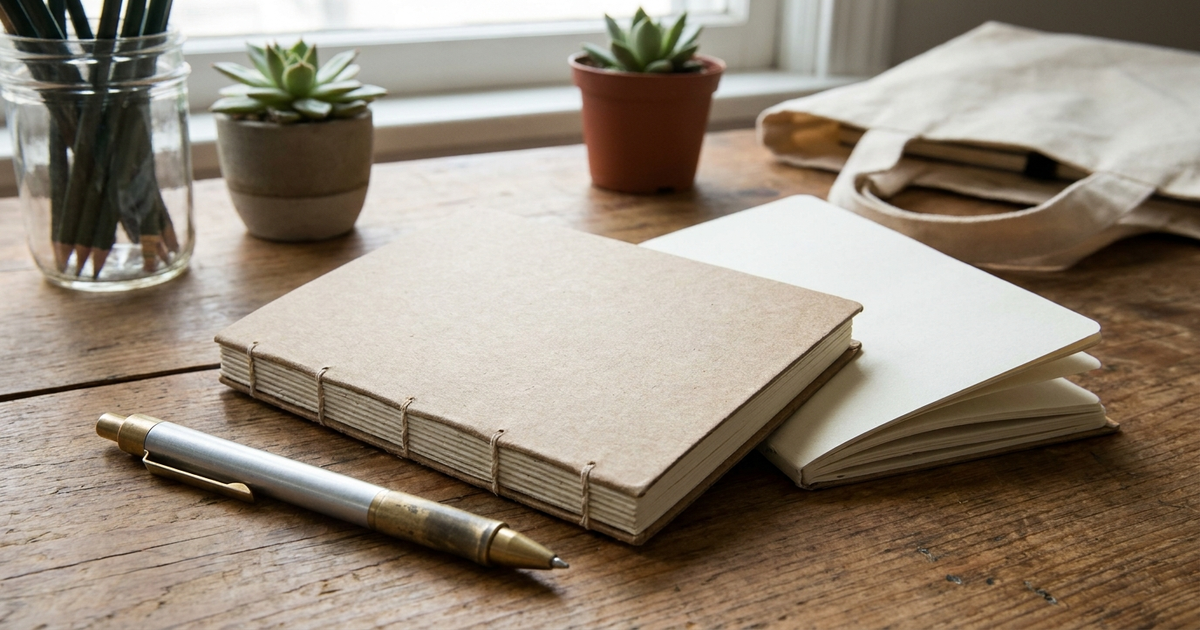
Chester Takau writes about sustainable school gear from a Pacific-Island perspective, decoding eco-certifications so buyers can tell real claims from greenwashing.
This is a research piece, not a product test. I haven't tested these pens myself, so every figure below comes from the cited sources, and company-reported numbers are labelled as such.
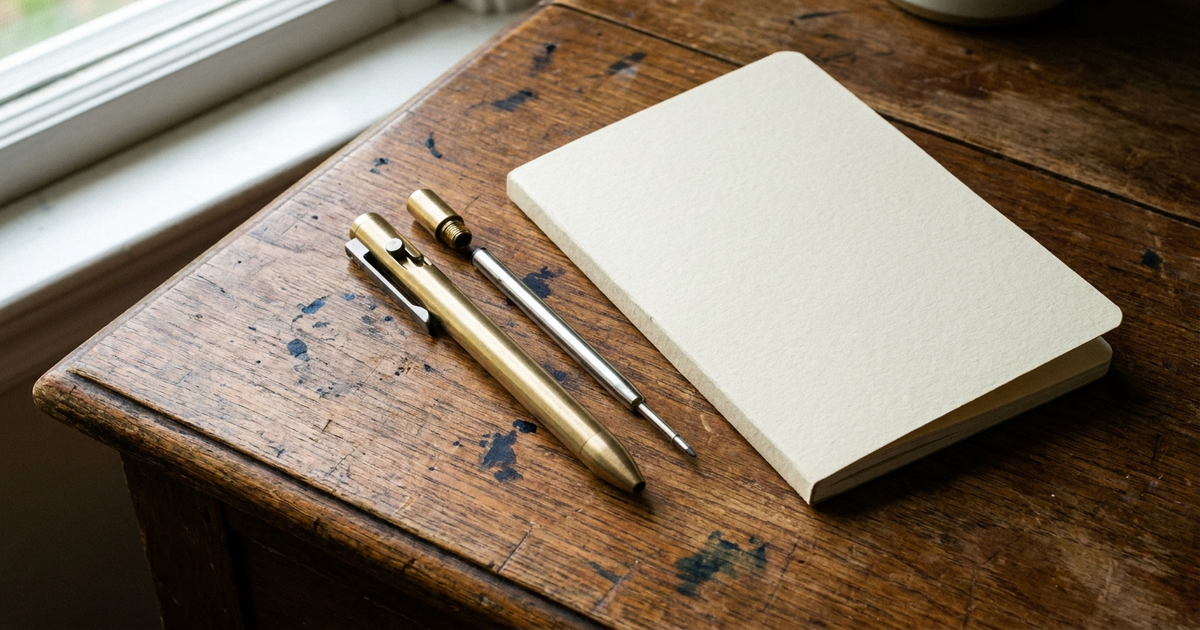
Which school pens are plastic-free, low-plastic or recycled-plastic?
Most guides lump these together. Here is the split, based on Ethical.net's updated pen and pencil guide (13 October 2026):
| Tier | Examples | What the sources say |
|---|---|---|
| Plastic-free body | Caran d'Ache 849 (aluminium), Parker Jotter (stainless steel) | Only metal-bodied pens made the plastic-free list. |
| Recycled plastic | Pilot B2P (~89.8%), Schneider Reco (92%), STABILO GREEN BOSS (83%) | Still plastic. It keeps existing plastic in use rather than removing it. |
| "Biodegradable" claims | PLA "corn plastic", wheat-straw, bamboo | PLA showed no measurable breakdown in seawater or freshwater tests and composts only at industrial temperatures. Wheat-straw pens are usually bound with polypropylene. Bamboo is only worth it if it takes a standard refill. |
Is a recycled-plastic pen like the Pilot B2P good enough?
It depends on what you're optimising for, and the sources disagree. Some r/ZeroWaste commenters see the B2P as a practical middle ground, while a Berkeley student zero-waste audit argued that ink refills beat recycled-plastic pens. Pilot's own 2026 CSR report, cited on Pilot Europe's site, says over 1.4 tons of ocean and river plastic have gone into more than 10 million B2P pens, and that refilling one FriXion Ball three times instead of buying four pens cuts the CO2 impact by 62%. Those figures are company-reported. Even taken at face value, the second one makes the same point as the refill camp: the pen you don't throw away is the lowest-waste pen.
What is the lowest-waste pen for a kid who loses everything?
Refillable is the strongest point of agreement across the sources. The Sierra Club recommends refillables like the Zebra F-701 and notes that millions of non-refillable pens end up in landfills every year. The catch is lock-in. In Plastic Free warns that a pen needing rare cartridges can become useless once the first refill runs out, so check that the pen takes a standard, easy-to-buy refill before you buy it.
Fountain pens are more contested. Supporters point to the waste saved, since the Doncaster Free Press estimates a 1,000-pupil school sends about 10,000 plastic tubes to landfill a year. Critics cite cost, loss and the worry that bottled ink will end up on a child's bag, hands and face. A cartridge fountain pen cuts waste less than a bottle-filled one, because the cartridges are plastic. A bottle needs a converter, and a small child may not manage that cleanly. For a younger child who loses pens, a metal-bodied refillable ballpoint is the safer bet. For a secondary or university student who writes a lot, a fountain pen is more realistic.
How do you pick a plastic-free notebook?
Look at the construction, not just the paper. Guides agree on recycled or FSC paper and no plastic cover. Spiral bindings and mixed-material covers are a known recycling headache, which is why the Sierra Club's Ask Ms. Green column is cautious about spiral notebooks. Laminated or shrink-wrapped covers have the same problem. Stitched or glued bindings with a paper cover are the easiest to recycle.
On labels, the Dingbats* 2026 stationery guide (a brand-published source) advises checking for FSC-C or FSC-Mix codes and third-party certification rather than a vague "eco-friendly" badge. A June 2026 Businesslife article also points to FSC, PEFC and Blue Angel labels, though it cites no primary studies, so treat its "paper recycles 5–7 times" figure as a rough one. This is the same label-reading habit I use for bags, and it carries over: a claim without a named certification isn't worth much. The same logic applies to the secondhand school supplies guide, where the plastic-free choice is often a used item rather than a new "green" one.
Moms Clean Air Force's short "Mom Detective" video gives quick tips for cutting plastic when you shop for school supplies. It's a vertical Short, so it's a quick overview rather than a deep dive.
Where can you recycle used pens now that TerraCycle is closing?
Options have narrowed. Ethical.net reports that the TerraCycle × BIC France writing-instrument scheme is closing, with last parcels due 31 October 2026. The UK TerraCycle writing-instruments programme closed in December 2024, and the free US BIC scheme is no longer listed. Some schools run their own drives. Lincoln Heights Public School in Ontario, for example, collected used pens, mechanical pencils, markers and highlighters, caps included, for a Staples classroom recycling program that earned a $25 gift card per filled box and ran to 30 September. Check what your local school or retailer offers. If nothing exists, buying fewer, longer-lasting pens matters more than any recycling scheme.
What should a plastic-free school supply list say?
Teachers' supply lists drive most purchases, and few of them mention materials at all. A workable list asks for refillable pens with standard refills, paper-covered notebooks with stitched or glued binding, and FSC-certified paper, and it avoids brand names that force a plastic-heavy choice. Plastic Pollution Coalition's September 2026 post, "Go Back to School Plastic Free," points families to EarthHero and ZeroWasteStore for plastic-free notebooks, pencils, crayons and markers. I couldn't load that page's body to check it, so treat the retailer names as pointers rather than endorsements. For wider ideas beyond stationery, our zero waste school lunch guide covers the food side, and a bag that lasts longer cuts waste too: see how long a school bag should last by type.
What about STABILO and other brand claims?
STABILO says it will use bio-based and recycled plastics in ten products from 2026 and reports saving 348 tonnes of virgin plastic in 2024/25. Its bio-based claims rely on ISCC PLUS mass-balance accounting, which tracks bio-based inputs on paper rather than guaranteeing they are in your specific pen (STABILO sustainability page). Ethical.net also flags offset-based "climate neutral" claims from Schneider and Pilot. None of that makes those pens bad, but none of it makes them plastic-free either.
Quick answers
Are fountain pens with cartridges better than disposable pens? Usually, because one pen lasts for years, but the cartridges are plastic. Bottled ink with a converter removes that waste.
Can spiral notebooks be recycled curbside? It depends on your local rules. The binding is the usual obstacle, so remove it if you can or choose a stitched notebook.
Is bamboo a safe plastic-free choice? Only if the pen takes a standard refill, which Ethical.net says most listings don't state.
Sources
- Ethical.net — Sustainable Pens and Pencils (updated 13 Oct 2026)
- Pilot Europe — Recycled Plastic Pens (CSR Report 2026 figures)
- STABILO — Sustainability Initiative
- Sierra Club — Ask Ms. Green: School Supplies
- Plastic Pollution Coalition — Go Back to School Plastic Free (Sept 2026)
- Green-Schools Ireland — Let's Go Plastic Free in 2026
- Lincoln Heights Public School — Writing Instrument Recycling Program
- Businesslife — Eco-Responsible Back-to-School Supplies
- Dingbats* — Sustainable Stationery Guide 2026
- Doncaster Free Press — Should Children Switch to Fountain Pens?
- In Plastic Free — Refillable Pens
Updated October 2026.
Transparency note: This article was researched and written by Chester Takau with AI assistance for research gathering and drafting. All recommendations reflect the author's own editorial judgment.
Comments
Post a Comment