What Is Cork Fabric for Bags? The Sustainable Leather Alternative Explained
By Chester Takau · August 2026
Chester Takau writes about sustainable school gear from a Pacific-Island perspective, decoding eco-certifications so buyers can tell real claims from greenwashing.
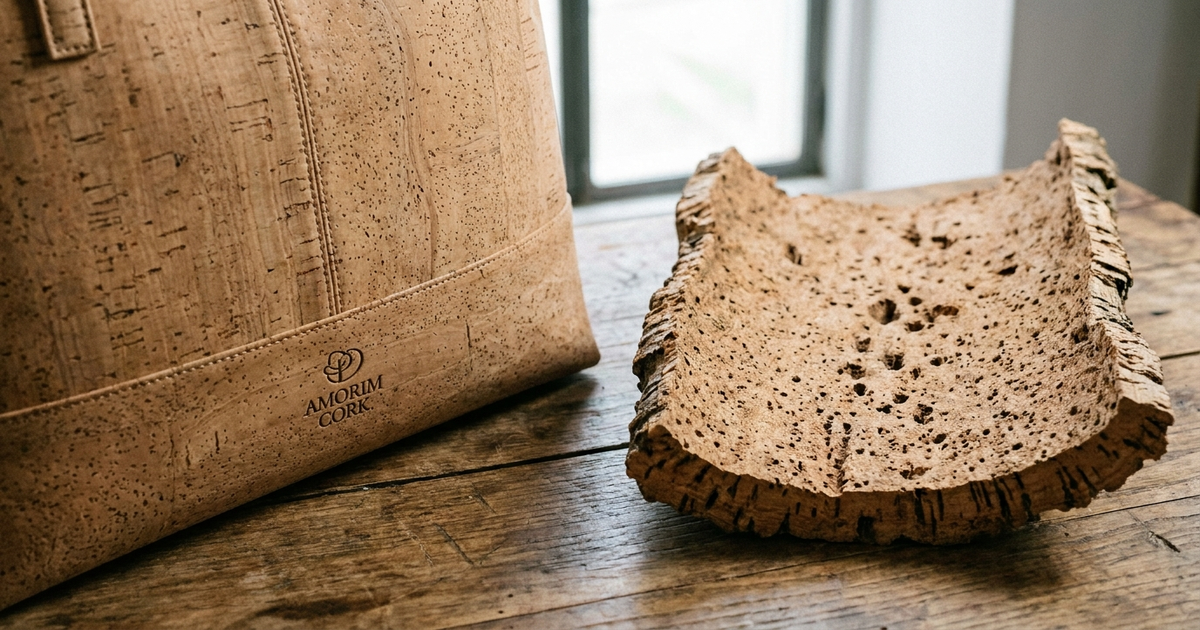
Where does cork fabric actually come from?
It starts as bark stripped from a living cork oak, mostly in Portugal, without felling the tree — the bark is left to regenerate and is typically re-harvested on a nine-year cycle. That bark is boiled, dried, and shaved into paper-thin sheets, which are then laminated onto a backing fabric to give it the flexibility and tear resistance a raw slab of bark doesn't have on its own. Cork's rise in bags is part of a broader 2026 push toward sustainable materials, with retailers pitching it alongside mushroom leather and Piñatex as fashion houses like Gucci and Prada keep folding it into collections rather than treating it as a niche substitute (The Cork Store, 2026).
Is cork fabric actually waterproof, or just water-resistant?
Water-resistant, not waterproof — and this is the single most overclaimed detail in cork marketing. Cork's cell walls contain suberin, a natural waxy compound that sheds rain and spills well, which is why some sellers round that up to "waterproof." More careful sources are blunter about the limit: it handles weather and splashes fine, but a soak or prolonged submersion will get through it, unlike a genuinely waterproof coated fabric (Sustainable Jungle, Corkor). Treat a cork bag like you would a good leather one — rain-safe, not swim-safe.
What's actually glued behind the cork?
Almost always a cotton, polyester, or thin polyurethane backing — the shaved cork skin is too delicate on its own to hold stitches or survive normal handling, so it's laminated to something with more structure (Sallie Tomato). This is the part most product listings skip: a "100% natural" claim on the front usually means the visible face is natural cork, not that the whole laminate is. If that backing is a recycled synthetic rather than virgin plastic, the certification that actually verifies a recycled-content claim is what turns that into a checkable fact instead of a marketing line — cork alone doesn't make the backing sustainable.
How durable is it for an everyday bag?
Better than PU faux leather, which tends to crack within three to five years, but not immune to wear. Cork doesn't peel or split the way PU does, and it's naturally hypoallergenic and easy to sew even on a home machine (Corkor). The honest complaints from owners are about stress points: corners, strap edges, and seams show color rub and light fraying after six-plus months of daily use, even while the main panel still looks new (Ask MetaFilter). Heat is the other real risk — high heat softens the adhesive layer, which is why ironing a cork panel or leaving a cork bag in a hot car is the fastest way to cause premature peeling (MB Cork care guide). For a bag that's carrying a laptop to school every day, that heat sensitivity is worth weighing against the alternatives in our roundup of eco-focused laptop backpacks built for daily student use.
The video above walks through the material hands-on — what it feels like, how it cuts, and how it behaves once it's sewn into a project, which is a better gut check than any spec sheet.
Is this the same cork as a wine bottle or a corkboard?
Same tree, different cut. Wine stoppers are punched from thick, dense cork in cylindrical plugs; corkboard is made from compressed granules and glue. Cork fabric is a much thinner shaved sheet, chosen for flexibility over compression strength, which is why it drapes and folds like a textile instead of behaving like a solid plug or a rigid board.
Is it vegan, and is it worth the price over faux leather?
Yes — no animal product is involved at any stage, and it's commonly marketed as vegan and cruelty-free. On price, cork bags cost more than typical PU faux leather up front, but PU's three-to-five-year crack cycle means faux leather often gets replaced twice over before a cork bag needs it, which narrows the gap on a cost-per-year basis (Von Baer). For families weighing durability against footprint when buying a kid's bag, that trade-off is the same one covered in our guide on how schools can steer families toward greener backpack choices.
Sources
- Sustainable Jungle — What Is Cork Fabric? Is Cork Leather Sustainable?
- Sallie Tomato — How Cork Fabric Is Made: From Tree to Textile
- Corkor — How Durable Is Cork Fabric?
- MB Cork — Cork Fabric Care Guide
- Von Baer — PU Leather vs Faux Leather
- Ask MetaFilter — Cork Handbags: Durable?
- The Cork Store — Top Eco-Friendly Fashion Trends 2026
Updated August 2026.
Transparency note: This article was researched and written by Chester Takau with AI assistance for research gathering and drafting. All recommendations reflect the author's own editorial judgment.
Comments
Post a Comment