What Is Fast Fashion and How It Applies to School Bags?
By Chester Takau · August 2026
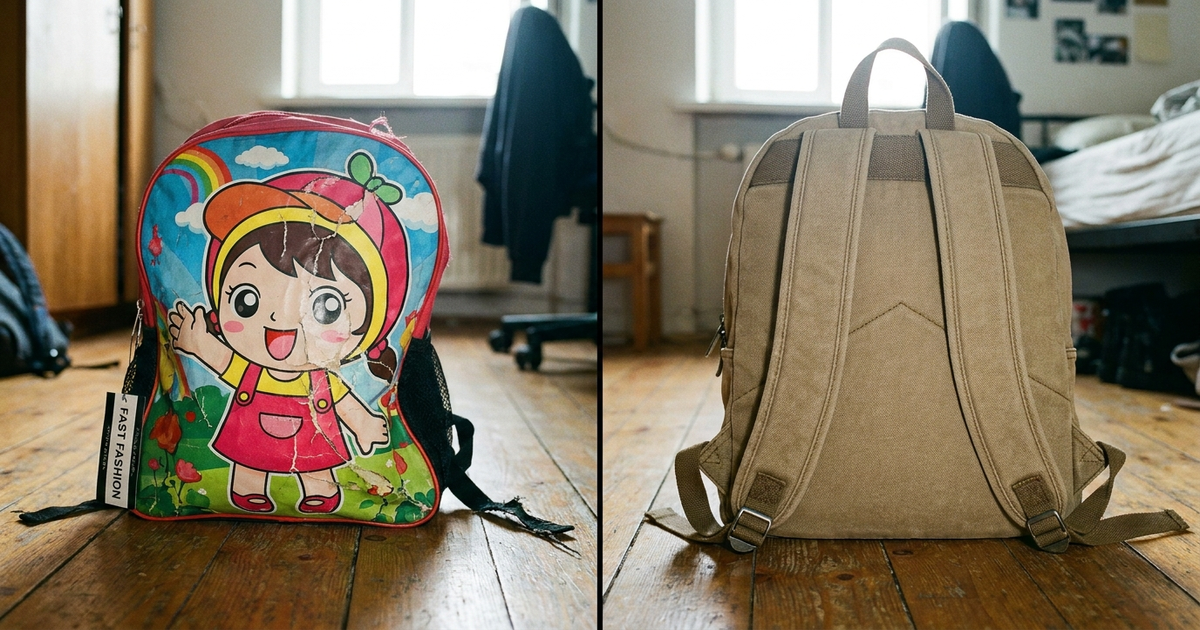
Fast fashion is a business model built on cheap materials, rapid trend turnover, and a price low enough that replacing the item feels easier than repairing it. Backpacks fit that model just as well as t-shirts: a $12-15 printed bag with a synthetic shell, glued (not stitched) seams, and a trend print designed to look dated within a year. The clothing industry gets most of the scrutiny, but a school bag bought to match this year's TikTok aesthetic and binned in February is the same disposable cycle wearing a different shape.
Chester Takau writes about sustainable school gear from a Pacific-Island perspective, decoding eco-certifications so buyers can tell real claims from greenwashing.
Are cheap Shein or Temu backpacks actually fast fashion, or just cheap?
Both, and the regulators now agree. France fined Shein roughly €40M in July 2025 for deceptive discounting — 57% of its advertised "discounts" were fabricated — and for making sustainability claims, including a pledge to cut emissions 25%, that it couldn't substantiate (Sourcing Journal, 2025). In June 2026, France's parliament went further, passing a law that puts a per-item penalty of €0.25-€12 on ultra-fast-fashion goods starting in 2026, rising to €2-€20 by 2030, plus a full ad ban from January 2027 (France 24, 2026). Backpacks and accessories aren't named separately from clothing in that fight — they're sold through the same platforms, at the same throwaway price point, with the same disposable intent.
Is a $15 backpack really a false economy compared to a $30 one?
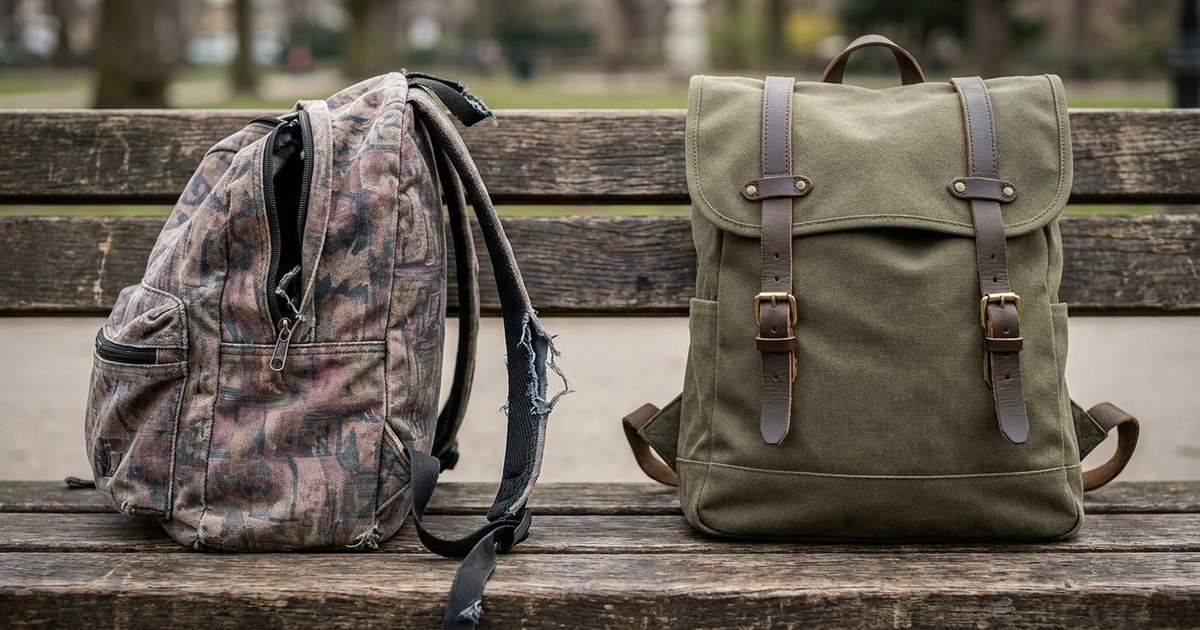
Run the math and it usually is. A $15 bag that dies by February — zippers jamming, straps tearing at the stitch line — needs replacing at least once a school year, sometimes twice. A $30 bag with reinforced seams and a repairable zipper commonly lasts three years, which works out to about $10 a year against $15-30 a year for the cheap option (Everyday Cheapskate). JanSport's lifetime warranty is the case people point to most often for the opposite end of that trade: buyers report the same bag lasting seven-plus years because a broken zipper gets repaired instead of the whole bag getting binned.
Is replacing a working bag every year for style also fast fashion?
Yes, and this is the angle almost nobody names directly. Most coverage of backpack replacement talks about durability failure — the zipper broke, the strap ripped. But a high schooler swapping a fully functional bag for a new print because last year's design looks dated is the trend-churn half of fast fashion, not the durability half. Kipling's own school-bag FAQ draws that line: replace for function, not for fashion (Kipling). A bag bought and dropped within a single school year for aesthetic reasons never had a chance to earn out its manufacturing footprint.
What happens to a backpack when it's thrown out?
It doesn't biodegrade — most backpack shells are polyester or nylon, and both are plastic. The textile industry as a whole produces roughly 92 million tonnes of waste a year, projected to reach 134 million tonnes by 2030, with about 85% of that landfilled rather than recycled (Waste Direct, updated 2026). Discarded clothing and accessories from Europe, Asia, and the Americas keep piling up in places like Chile's Atacama Desert, which has become one of the most visible dumping grounds for exactly this kind of synthetic waste (Manila Times, 2026). A backpack thrown in the trash in August is still sitting in a landfill, intact, a decade later.
How do you spot a fast-fashion backpack before buying it?
Five things line up almost every time: an ultra-low price with no explanation for how it's possible, glued rather than bar-tacked stitching at stress points, a trend print with no matching plain option, no warranty or repair program, and a shell fabric that isn't named on the listing at all. Recycled-content claims are worth checking rather than trusting outright — our breakdown of what recycled-material backpacks are actually made from covers how to tell a genuine recycled shell from a marketing label. If you're shopping for a laptop-carrying student rather than a younger kid, our roundup of eco-focused laptop backpacks for students lists current models that pass this checklist rather than fail it.
The explainer above breaks down the scale of fast fashion's waste and emissions footprint industry-wide — useful context for why a $12 backpack is priced the way it is. PBS NewsHour's own reporting on the industry frames the same problem in plainer terms: fast fashion is "under scrutiny for poor working conditions and using cheap textiles that quickly end up in landfills."
What can schools do about it?
The parent side of this is shifting fast — a 2025 European Consumer Organisation survey found 73% of EU parents now weigh environmental impact when buying school supplies, and searches for "sustainable backpack" rose 40% year-over-year in 2025 according to the National Retail Federation. Schools have leverage here through supply lists and uniform-shop partnerships. Our guide on how schools can steer families toward sustainable backpack choices covers what that looks like in practice — recommending durability standards on the supply list instead of leaving price the only variable a family sees.
Sources
- Sourcing Journal — Shein's €40M France Fine
- France 24 — French Parliament Passes Fast Fashion Bill
- Waste Direct — Fashion Waste Statistics (2026)
- Manila Times — Fast Fashion's Legacy of Toxic Trash
- Kipling — How Often Should I Replace My School Bag?
- Everyday Cheapskate — Best Inexpensive Backpacks
- PBS NewsHour — Why Fast Fashion's Allure Comes With Environmental and Human Costs
Updated August 2026.
Transparency note: This article was researched and written by Chester Takau with AI assistance for research gathering and drafting. All recommendations reflect the author's own editorial judgment.
Comments
Post a Comment