How Long Should a School Bag Last? A Realistic Timeline by Type
By Chester Takau · July 2026
What's a realistic lifespan by school stage?
There's no single number, because a primary schooler and a Year 11 student put a bag through completely different abuse:
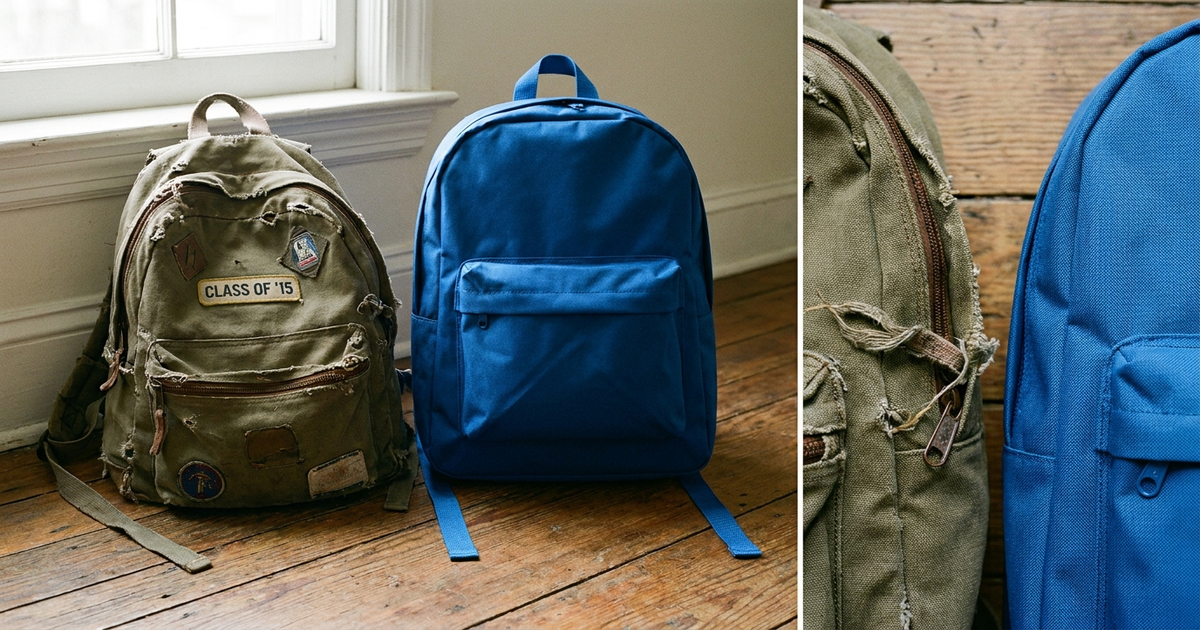
- Primary / elementary, character or licensed design: about 1 school year. The print or theme gets outgrown before the fabric fails, and cheaper licensed bags are typically built to a lower spec than plain ones. (Oiwas, 2026 buying guide)
- Middle or high school, quality non-licensed bag: 2-4 school years is the expectation most 2026 buying guides set for a decent build. (Oiwas)
- Nylon or ballistic nylon, cared for properly: up to 3-5 years, versus cheaper polyester which wears faster under the same use. (Backpacks4Less, 2026 school year guide)
- Brand with a real lifetime warranty (JanSport, Osprey): no fixed ceiling — you claim a replacement instead of buying a new bag, though the claims process can take time and usually means shipping the old one off. (Even Steven Money, JanSport warranty claim)
Why do some bags die in 4 months and others last years?
On a UK parenting forum, a bag-store manager reportedly told a customer that backpacks "last 4 months at most" and that she buys three or more a year for her own kids — a claim that shocked other parents in the thread, most of whom expected at least a year out of a bag. (MoneySavingExpert forum) Both experiences are true; they're just describing different builds. The construction detail that actually predicts lifespan is stitch density: quality bags run roughly 6-10 stitches per inch with reinforced anchors where the straps meet the body. Below that range, the seams give out well before the fabric itself wears through — which is exactly the 4-month failure mode. (Backpacks.global, construction benchmarks)
Does an overloaded bag wear out faster?
Yes, and this connection gets missed in most guides. The American Academy of Pediatrics' long-standing guidance, still cited in 2025-2026 coverage, is that a loaded backpack should stay under 10-15% of a child's body weight. That figure is usually framed as a back-pain issue, but it's also a durability one: every kilogram over that line adds direct strain to the exact stress points — strap anchors, zipper pulls, base seams — where bags fail first. A bag stuffed with every textbook every day will blow a zipper or rip a strap seam within a year regardless of how well it was built. (Nemours KidsHealth, backpack safety)
Material choice is the other lever, and it's the whole subject of the video below — why fabric weight and weave determine how many years a bag can take that kind of load before it gives out.
What about school-mandated clear bags?
Worth flagging separately, because it changes the math entirely. In January 2026, Albuquerque Public Schools spent roughly $90,000 on about 7,000 mandatory clear backpacks for six middle schools — and within days, parents were reporting bags "unraveling at the seams" and falling apart. The district ended up handing out free replacements and telling families to keep water bottles out, since moisture was degrading the seams further. (Albuquerque Journal, Jan 2026) Thin PVC-style clear bags aren't built to the same stitch-density or material standard as a normal backpack, so if your child's school mandates one, treat "lasts the semester" as a realistic bar rather than "lasts the year."
Is it cheaper to buy one good bag or replace a cheap one every year?
Run the numbers rather than going on price tag alone. A cheap bag that needs replacing every year still costs money every single year, indefinitely. A well-made bag that costs three or four times as much but lasts three or four years lands at roughly the same annual cost — and a bag backed by a real lifetime warranty can beat both over time, since a defect claim replaces it for free instead of you paying again. The exception is young kids whose taste in designs changes faster than any bag wears out; there, a cheaper yearly bag is the more rational choice, not a false economy.
A zipper's blown or a strap's torn — repair, or is it done?
Mechanical failures — a slider, a snapped buckle, torn strap stitching — are almost always worth fixing rather than replacing the whole bag, and most take under twenty minutes with no sewing machine. Our school bag repair guide walks through each fix. Replace the bag instead when the waterproof coating is peeling across a large area or the internal frame has cracked; at that point a repair is patching a bag that's failing everywhere at once.
If you're shopping for a bag built to actually hit the 2-4 year mark, our roundups of recycled material backpacks and laptop backpacks for students cover options tested for exactly this kind of daily wear.
Transparency note: This article was researched and written by Chester Takau with AI assistance for research gathering and drafting. All recommendations reflect the author's own editorial judgment.
Comments
Post a Comment