How to Get Teens to Care About Sustainability (Without the Lecture)
By Chester Takau · July 2026
Why doesn't lecturing my teen about the environment work?
Because it treats sustainability as an obligation imposed from outside, and adolescence is precisely the stage where kids push back against exactly that. A 2026 research review by psychologist Sander Thomaes frames climate engagement as tied to a teenager's developing sense of identity and agency — they need to feel like the action is theirs, not a chore assigned by a parent. That's the same principle behind STTOP ("Stay Tuned To Our Planet"), a program that piloted 64-plus deliberately hopeful, non-doom sustainability lessons with 150-plus students across NSW and WA schools rather than the standard fear-based unit. Educators running it reported students engaging with the material instead of tuning it out, which lines up with a broader case made by Eos, the AGU's publication: climate education has to build hope and agency, because fear-based messaging produces paralysis, not action, not the other way around.
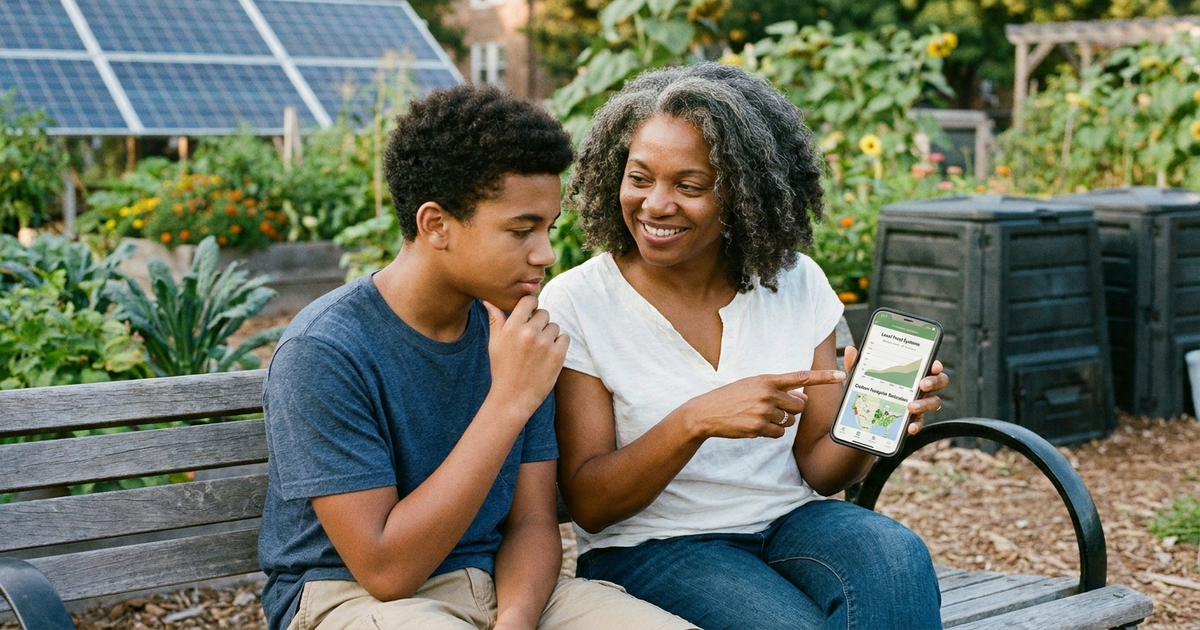
As teen climate activist Nkosilathi Nyathi puts it in his TED talk on youth-led climate solutions:
"My generation has more to offer than ever before. We live climate change in a way our parents' generation did not."
That's the reframe that works — not "you should care because the planet needs saving," but "you already live this differently than we did, so you get to lead on it."
My teen says nothing they do matters because corporations cause all the pollution. What do I say?
Don't argue them out of it — they're not entirely wrong, and dismissing the point reads as dishonest. A July 2026 piece written by a Gen Z author argues that youth climate action is stalling less from apathy than from feeling that individual choices are pointless against corporate and systemic emissions. The Nation has documented a related pattern called "climate hushing," where even concerned young people quietly disengage because they suspect their personal effort is theater. The honest answer is that both things are true at once: systemic change from companies and policy matters more in raw tonnage, and personal action is still how most people build the identity and habits that make them willing to push for the systemic stuff later. Neither cancels the other out.
Is it hypocritical for teens to care about the planet while buying Shein hauls?
It's a real tension, not hypocrisy, and treating it as a character flaw just shuts the conversation down. GlobalData found 72% of Gen Z say a brand's sustainability credentials matter to them, and yet Shein's revenue hit roughly $32.5 billion in 2024, up 43% from 2022, driven heavily by TikTok haul culture. The Conversation points to the obvious explanation most commentary skips: 77% of Australian Gen Z report real cost-of-living stress, and cheap fast fashion is often the only option that fits a teenager's actual budget. Rather than framing this as "you don't really care," a more useful move is showing them how to check a specific claim rather than trust a whole brand — the audited standard behind a recycled-material claim exists precisely so a $15 item can carry a verifiable claim instead of a vague "eco" label, which turns the conversation from guilt into a skill they can actually use.
How do I talk about climate change without making their eco-anxiety worse?
Lead with what they can do, not with the scale of the problem. The same 2026 Sacred Heart / GreatBlue study found 55.1% of the 15-29 age group report eco-anxiety, and only 21% feel hopeful about the future — numbers that get worse, not better, when a conversation opens with statistics about how bad things are. Eos makes the case directly: effective climate communication builds hope and agency rather than fear, because fear without a next step is what produces the paralysis in the first place. Concretely, that means every hard fact you share should come paired with one specific thing they can do about it that same week — not a five-year plan, a today-sized action.
Why do teens learn about climate mostly from TikTok instead of school — is that a problem?
Partly. Education Week reports that most teens now get the bulk of their climate information from social media rather than the classroom, which is good for reach and relatability but leaves plenty of room for misinformation and doom-scrolling to fill the gaps schools leave open. The fix isn't pulling teens off social media — that's not realistic — it's making sure the adults in their life are willing to be a second, more reliable source when a video raises a question, rather than the only source being whatever algorithm served up next.
How do I get my teen involved in something that feels real, not performative?

Point them at action with a visible outcome, ideally alongside peers rather than solo. The Global Day of Action, a youth-led climate education initiative, reached students in 87-plus countries running their own local awareness campaigns rather than passively attending an assembly. The UNDP and Italy's Youth4Climate Call for Solutions similarly funds teens to turn climate ideas into actual built projects instead of essays about the problem. Schools can build the same instinct into ordinary decisions — how schools can steer students toward sustainable backpack choices is a useful template for turning "sustainability" into a skill instead of a subject.
What's one concrete thing they can actually do this week?
Give them a purchase decision they're already making anyway, and let them own the research. Back-to-school gear is a good low-stakes entry point precisely because it's not abstract — a laptop bag is something they're going to carry every day regardless, so comparing eco-conscious laptop backpacks built to actually last against the fast-fashion default is a real decision with a real trade-off, not a hypothetical. Let them make the call and defend it; that's the agency the research keeps pointing back to, not one more rule handed down from a parent.
Transparency note: This article was researched and written by Chester Takau with AI assistance for research gathering and drafting. All recommendations reflect the author's own editorial judgment.
Comments
Post a Comment