What Is OEKO TEX? The Textile Safety Certification Explained (2026 Update)
By Chester Takau · July 2026
What does OEKO-TEX actually test?
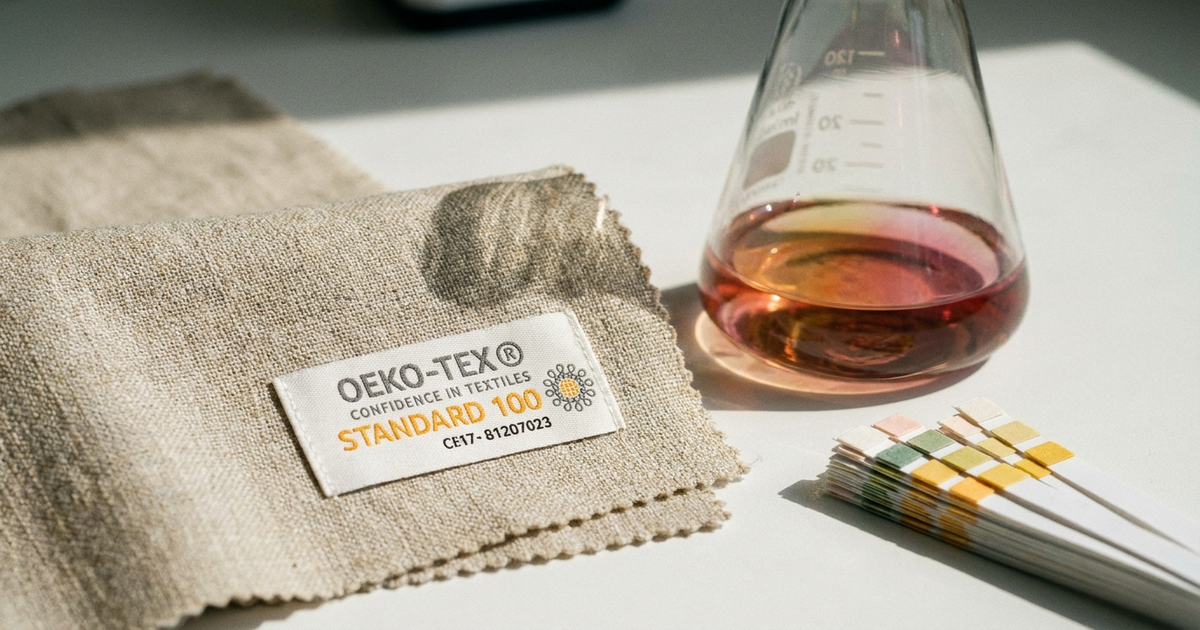
STANDARD 100 screens the finished product — yarn, fabric, buttons, thread, the lot — for a defined list of substances known or suspected to be harmful to human health: things like formaldehyde, banned azo dyes, heavy metals, phthalates, and per- and polyfluoroalkyl substances (PFAS). The current governing text is Edition 01.2026, and OEKO-TEX reviews the limit values at least once a year. (OEKO-TEX STANDARD 100, Edition 01.2026) Testing is graded by product class, and this is the detail most shoppers miss: Class I (baby items) has the strictest limits, Class II covers anything with extended skin contact, Class III is occasional skin contact, and Class IV is decorative or non-contact material like curtains. A certificate on a decorative fabric tells you far less than one on baby bedding.
Does OEKO-TEX mean the product is organic or eco-friendly?
No, and this is the single most common mix-up in shopper reviews and forums. STANDARD 100 tests the end product for chemical residue — it doesn't check whether the fiber was grown organically, how much water the mill used, or whether dye runoff reached a river. A "certified organic bamboo" claim and an OEKO-TEX label are answering two completely different questions; a fabric can pass OEKO-TEX testing while being processed with heavy chemical inputs upstream, as long as none of it remains in the finished textile above the limit. Critics, including the Changing Markets Foundation, have pointed to exactly this gap as a greenwashing risk when brands lean on the label to imply broader sustainability. OEKO-TEX doesn't hide this scope — its own materials frame it as a non-toxic guarantee, not an eco-label — but the label alone won't tell you that. (The Roundup)
What's changing under the June 2026 rules?
OEKO-TEX publishes annual updates every March, with a three-month transition before they take effect. The 2026 revisions are the tightest yet on chemical limits: (Hohenstein)
- The PFOS limit drops to 1 mg/kg across both STANDARD 100 and ORGANIC COTTON systems. (Testex)
- Total fluorine falls from 100 ppm to 50 ppm, tracking California's PFAS legislation, with an exception route if a brand can document a non-PFAS fluoride source. (Hohenstein)
- Bisphenols B, F, and S get cut from 1,000 mg/kg to 200 mg/kg, affecting STANDARD 100, LEATHER STANDARD, ORGANIC COTTON, and ECO PASSPORT. (AITEX)
- New traceability rules mean renewal certificates now need the upstream basic certificate from your direct supplier rather than a second-tier one, with a transition period running to June 2027. (Hohenstein)
None of this changes what the label on a product in your hands right now means. It matters more if you're evaluating a brand's current certificate — one issued under the old rules doesn't automatically carry the tighter 2026 limits until it's renewed.
OEKO-TEX's own explainer above walks through how the label works from yarn to finished product, which is a useful five minutes if you want to see the testing chain rather than take a certificate on faith. If you want to check a specific claim, OEKO-TEX runs a free Label Check tool on its site where you can enter a certificate number and confirm it's real and current — worth the thirty seconds before assuming a printed logo is accurate.
OEKO-TEX vs bluesign vs GOTS — which one matters for your purchase?
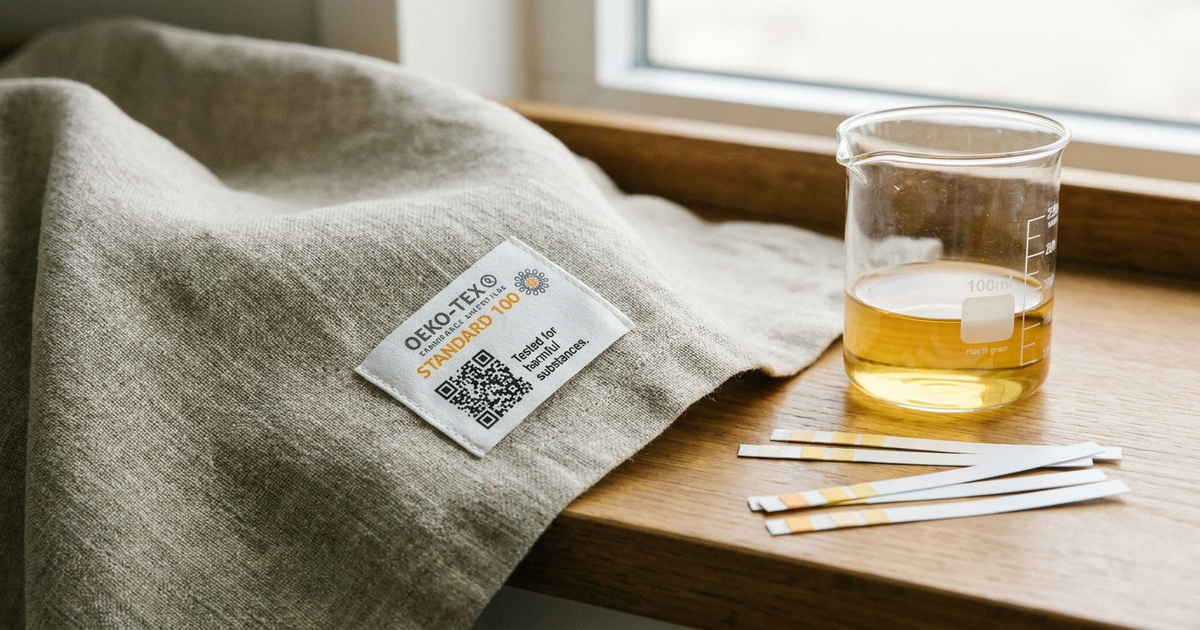
They answer different questions, so picking a "best" one is the wrong frame. OEKO-TEX STANDARD 100 tests the finished textile for harmful residue — the one to check for baby items and anything worn against skin. Bluesign screens the chemicals and dyes going into manufacturing before the fabric is even made, which is why it's more common on technical and outdoor gear; our bluesign explainer covers that distinction in more depth. GOTS certifies organic fiber content plus labor standards through the supply chain — the one that matters if the fiber itself, not just the residue, is what you care about. A product can carry any combination, or none, and none of the three substitutes for the others. TokMind's certification glossary also covers GRS certification for recycled content and Fair Trade Certified for pricing and labor — checking which label a product's marketing is actually pointing to is the part most shoppers skip.
Transparency note: This article was researched and written by Chester Takau with AI assistance for research gathering and drafting. All recommendations reflect the author's own editorial judgment.
Related on TokMind: GOTS vs OEKO TEX Difference: What Each Certification Actually Checks in 2026
Comments
Post a Comment