Where to Buy Secondhand Backpacks: A 2026 Marketplace-by-Marketplace Guide
By Chester Takau · July 2026
Where can I actually buy a secondhand backpack?
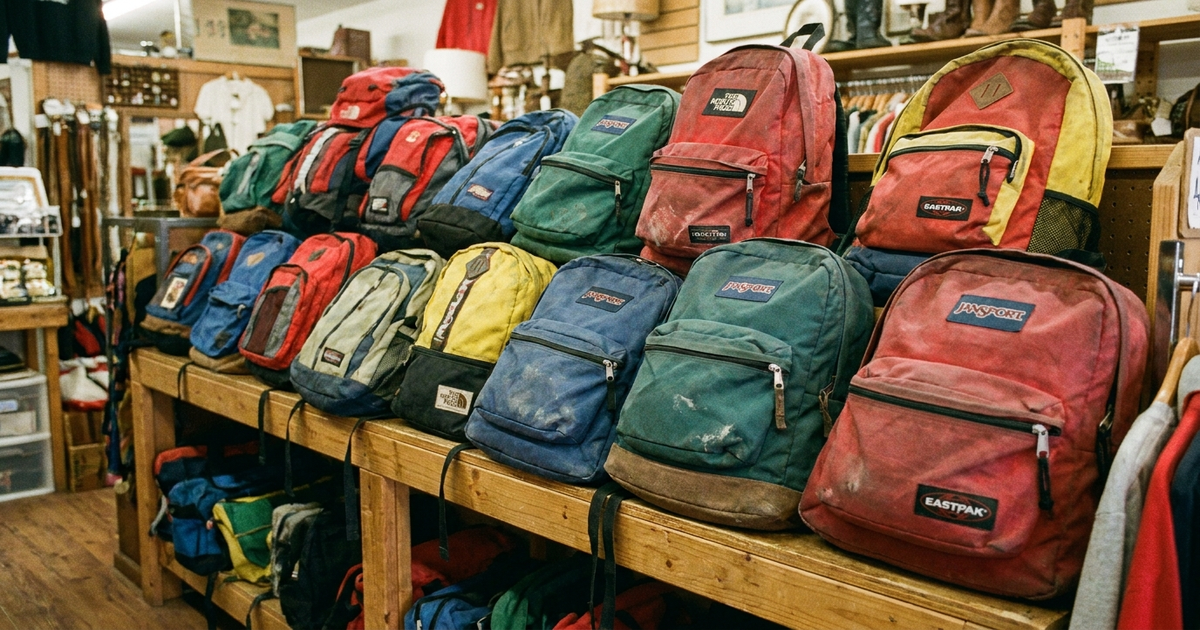
There isn't one best source — there's a best source per situation. General resale platforms (eBay, Poshmark, Mercari, Depop, Facebook Marketplace, OfferUp) cover the widest range of everyday and fashion backpacks. Outdoor-specific channels (REI Re/Supply, Geartrade, r/GearTrade, r/ULGearTrade) cover hiking and travel packs that thrift stores almost never stock. Brand-run resale (Patagonia's Worn Wear, Fjällräven's Pre-Loved) covers authenticated, brand-inspected used gear at a smaller discount. And physical thrift stores (Goodwill, Savers, Salvation Army) are still the cheapest option when you get lucky, just the least predictable.
eBay vs. Poshmark vs. Facebook Marketplace vs. Mercari vs. Depop — which is best for a backpack?
It depends on what you're optimizing for. eBay has the deepest inventory and the best tools for finding an exact model, but its own sellers complain that its authentication system flags real items as fake almost as often as it catches actual counterfeits. Poshmark leans fashion-forward — Kånken, Herschel, and designer packs show up constantly — but it's also where a 2023 survey found 12% of users had encountered a counterfeit item, so verification matters more there than anywhere else on this list. Facebook Marketplace and OfferUp are local, which means no shipping cost and a chance to inspect the bag in person before paying, at the cost of a much smaller selection. Mercari and Depop sit in between: Depop skews younger and more style-driven, Mercari is closer to a general eBay alternative with simpler shipping. If you want to try one before committing to a search strategy, none of them beat physically seeing the bag first — which is the one thing only local marketplaces and thrift stores offer.
HuffPost's guide above covers the technique side of secondhand shopping generally — where to look and how to move through a thrift trip efficiently — which applies just as well to a backpack search as it does to clothing.
Is REI Re/Supply actually worth it, or are the discounts too small?
For the risk-free trade, yes. REI's used-gear and trade-in program now runs across all roughly 174 of its stores plus online, and REI sold more than a million used items in a single year as the program scaled up. Every item is inspected before resale, comes with REI's standard satisfaction guarantee, and you don't need a co-op membership to buy — only to trade in for the up-to-50%-of-resale-value credit. The trade-off is price: Re/Supply items are curated and priced closer to retail than a random eBay or thrift listing, so it's the choice for buyers who'll pay a bit more to skip the inspection work themselves, not the choice for the lowest possible price.
How do I avoid buying a fake Kånken, Herschel, or luxury backpack?
Treat any listing photo that only shows the outside as incomplete. Ask the seller for close-ups of the interior tag, stitching at the strap anchors, and any zipper pulls — counterfeiters copy the exterior shape and logo well before they get the interior construction right. Compare the seller's price to the going rate for that exact condition; a "like new" Kånken or designer pack priced 60-70% below every comparable listing is the single most reliable red flag, more reliable than the photos themselves. Buy from sellers with backpack-specific sales history rather than a generic account that just started listing bags, and on platforms with buyer protection, keep the payment inside the platform rather than moving to a private transfer — that protection is the only recourse if a fake slips through.
Does the lifetime warranty still apply if I buy the backpack secondhand?
For a few brands, yes, and it's the single biggest reason buying used carries so little risk for hiking packs specifically. Osprey's All Mighty Guarantee covers any Osprey product, any owner, any era, no receipt or original owner required — buy a ten-year-old pack at a garage sale and Osprey will still repair or replace it under a torn strap or broken buckle. Fjällräven and Deuter also honor repairs on secondhand items in practice, though neither publishes a no-receipt guarantee as explicit as Osprey's. JanSport's warranty is more conservative and generally expects proof of original purchase, which secondhand buyers usually can't produce. Before buying a used pack from any of these brands, check the current warranty terms on the brand's own site rather than assuming the policy hasn't changed — these terms get revised more often than shoppers expect.
How do I check a used backpack for hidden damage before buying?
Work through zippers, seams, frame, and buckles in that order. Pull every zipper fully open and shut — a sticky or misaligned slider is the most common failure point and the hardest to fix cheaply. Check the stitching where the straps anchor to the body, since that joint carries the full load of the pack and fails before the fabric does. For hiking packs, flex the frame sheet with your hands; a warped or cracked internal frame won't show in a photo but will ruin the fit on a loaded trail. Buckles should click firmly and the plastic shouldn't look chalky or sun-faded, since UV-degraded plastic buckles snap without warning. If a seller won't answer specific questions about any of these four points, that's more informative than the photos they did post.
Is it unhygienic to buy a used backpack, and how do I clean one?
It's a fair concern, but a solvable one. Start by emptying every pocket and vacuuming the interior to pull out crumbs and debris, then hand-wash the fabric with a mild detergent and a soft brush, focusing on shoulder straps and the back panel where sweat concentrates. Mesh panels and foam hip belts hold odor longest — a diluted white vinegar wipe-down handles mildew smell that regular detergent misses, and everything should air-dry completely before use, since packing it away damp is what causes mildew in the first place. If the bag has a hydration bladder included, replace it rather than clean it; bladders are cheap and near-impossible to fully sanitize once they've grown biofilm. None of this is more work than washing a secondhand jacket, it's just a step people skip because a backpack looks structurally clean on the outside.
Where do I find lightweight hiking gear secondhand, since thrift stores never seem to have it?
Thrift stores are the wrong channel for this specifically — general donation bins get flooded with old school bags and gym bags, not ultralight backpacking packs, so the odds of finding one at Goodwill are genuinely low no matter how often you check. Community gear-trade forums like r/GearTrade and r/ULGearTrade are the better source: smaller audience, but sellers and buyers who actually know what a pack should weigh and cost, which cuts down on both scams and overpriced listings. A widely repeated tip in that community is worth remembering — the best deals come from people who tried backpacking as a new hobby and quit within a season, since their gear is barely used and they're motivated to sell fast rather than hold out for top dollar.
What's a fair price for a used backpack compared to buying new?
As a rough range, a used pack in good condition with no brand-warranty concerns should run 40-60% of current retail, and anything above 70% of retail needs a specific reason — rare colorway, unused condition, included accessories. That math is also part of why the resale market keeps growing rather than staying a niche: ThredUp's 2026 Resale Report projects the global secondhand apparel market will reach $393 billion by 2030, growing at roughly double the rate of new-apparel sales, with U.S. resale alone expected to pass $78.8 billion in the same window. None of that growth is really a supply problem for buyers — ThredUp's own data frames the bottleneck as getting more people to list their used gear, not a shortage of buyers, which is good news if you're the one shopping rather than selling.
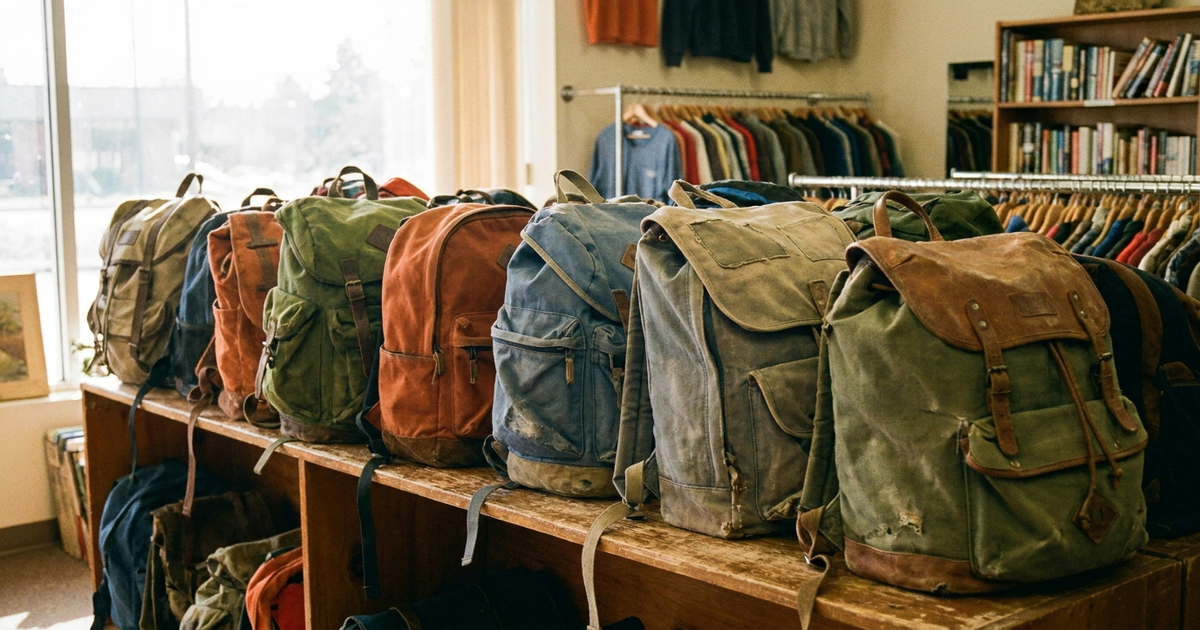
Buying secondhand also sidesteps a marketing problem that a lot of new "eco" bags haven't solved. A new backpack labeled sustainable or recycled still required new manufacturing, and unless the claim carries independent verification, it isn't automatically the better environmental choice next to something already in circulation — our explainer on what a genuinely audited recycled-content standard actually checks is worth reading before assuming a new bag's green label beats a used one on the shelf next to it.
If you're buying in volume rather than one bag at a time — a family with several kids, or a school setting a supply-list standard — the calculation shifts again, since bulk decisions compound the savings and the environmental impact together. Our guide to how schools can steer students toward sustainable backpack choices covers what changes when the buyer is setting a policy rather than making one purchase. And if secondhand genuinely isn't an option for a laptop-carrying student — a used listing photo can't verify padding thickness the way a spec sheet can — our picks for laptop backpacks with padding built to actually protect the device inside apply the same durability-first standard to buying new.
Transparency note: This article was researched and written by Chester Takau with AI assistance for research gathering and drafting. All recommendations reflect the author's own editorial judgment.
Comments
Post a Comment