What Is Fair Trade Certified? What the Label Actually Guarantees
By Chester Takau · July 2026
What does the Fair Trade label actually guarantee?
Two things, specifically. First, a Fairtrade Minimum Price — a price floor that kicks in when the market price drops below it, so a crash in commodity prices doesn't wipe out a grower's income. Second, a Fairtrade Premium — extra cash paid on top of the sale price, sent directly to the farming co-op or plantation committee, which the workers themselves vote on how to spend (clean water, schools, equipment, or cash bonuses). It says nothing about how the crop tastes, whether it's organic, or how big the farm is. It's a labor and pricing standard, audited against a published set of requirements — not a quality mark.
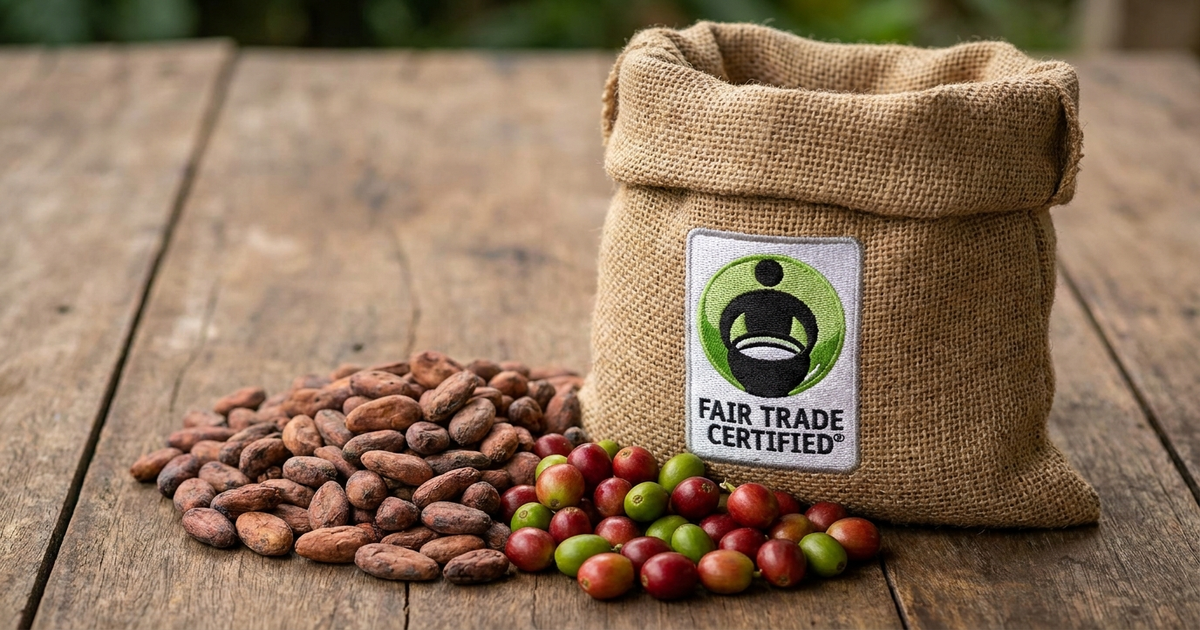
Fairtrade vs. Fair Trade Certified — same thing?
Close, but not identical, and the confusion is common enough that it shows up constantly in shopper forums. Fairtrade International (one word, the black-and-green-and-blue logo) is the original global system. Fair Trade USA (two words) split off in 2011 and runs its own certification with its own logo. The practical difference: Fair Trade USA allows large plantations to certify, not just smallholder co-ops, and historically set a lower coffee price floor ($1.40/lb vs. Fairtrade International's $1.80/lb). Both are legitimate, audited programs — they're just different organizations with different rulebooks, which is why reading the actual logo matters more than the phrase "fair trade" printed on packaging. (Fairtrade International)
Does the extra money actually reach the farmer?
Mostly yes, but not evenly, and this is the honest gap in most explainer articles. A study of Ivorian cocoa farmers found Fairtrade certification lifted household consumption by roughly 9%, and Fairtrade's own research reported Malawi tea smallholder incomes nearly tripling under the program. On the other side, a 2025 study across four Ghanaian crops found real implementation gaps — inspections that were rare, training that didn't happen, and farmers who didn't know a price premium existed at all. The leak point is usually oversupply: a co-op pays the certification fee for its whole crop but might only sell a fraction of it on actual Fair Trade terms, so the premium barely covers what certification cost them. (FoodUnfolded)
FoodUnfolded opens their explainer with the exact question most shoppers are actually asking:
"You've probably seen the Fairtrade label in your local grocery store, but have you ever stopped to wonder what is Fairtrade and how does Fairtrade actually work?"
What's changing with Fair Trade certification in 2026?
- Fairtrade International raised the cocoa Minimum Price by 45% — to $3,500/MT in Ghana — effective June–October 2026, alongside a new Living Income Reference Price that goes beyond the old flat floor. (Comunicaffe, Dec 2025)
- Fairtrade is rewriting all of its standards through a public consultation running across 2026, aiming for fewer, simpler rules by 2028. (WTiN)
Fair Trade vs. organic vs. Rainforest Alliance — what's the difference?
They verify different things, and a product can carry any combination. Fair Trade certifies price floors, a community Premium, and baseline labor conditions — it does not restrict pesticide use. Organic certifies growing methods, not pay. Rainforest Alliance covers similar labor and environmental ground but has no guaranteed minimum price. None of the three checks cup quality or bean grade, which is why some specialty coffee roasters prefer Direct Trade instead — paying above the Fair Trade floor through a direct grower relationship, no certification fee involved. Fair Trade's price floor also has the most teeth in commodities with steep price swings, like coffee and cocoa; it moves the needle less for hired-plantation labor, where wages on large certified estates often track uncertified ones closely. (Green America)
This is the last certification in TokMind's glossary series alongside GRS certification, which verifies recycled material content, and B Corp certification, which audits a company's overall governance and impact. Fair Trade is neither — it's a supply-chain pricing and labor standard specific to agricultural commodities, and it's worth checking which of the three a product's marketing is actually pointing to before assuming they overlap.
Transparency note: This article was researched and written by Chester Takau with AI assistance for research gathering and drafting. All recommendations reflect the author's own editorial judgment.
Comments
Post a Comment