Water Repellent Coatings Without PFAS: Which Technologies Actually Work in 2026
By Chester Takau · July 2026
PFAS-based durable water repellent (DWR) coatings have been the default way to make fabric shed water for decades, because the carbon-fluorine bond is nearly impossible to break down — the same property that earned them the "forever chemicals" name. That's changing fast: EU REACH restrictions on PFAS in textiles start taking effect in October 2026, and France's ban on PFAS in consumer clothing and footwear is already in force, expanding to all textiles by 2030. (bluesign) Below are the five real alternatives on the market right now, what each one is actually made from, and where each one falls short.
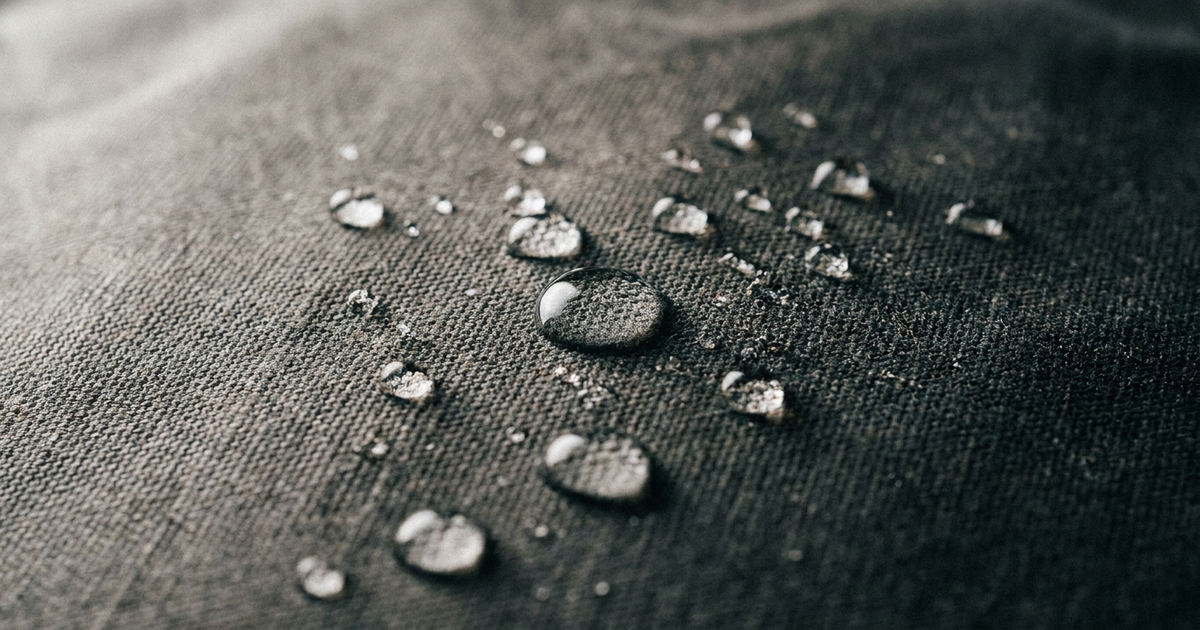
1. Wax and paraffin coatings
Most durableWaxed canvas is the oldest water-repellent fabric treatment there is, and it's having a comeback precisely because it never contained fluorine to begin with. Paraffin or beeswax makes the cotton fibers themselves hydrophobic rather than laminating a chemical film over them, so water beads and rolls off. It's fully re-treatable at home — rub a wax bar into worn patches, warm it with a hairdryer, done. The trade-off is weight and stiffness, and it doesn't work as a membrane treatment for breathable rain shells the way DWR does.
2. Silicone-based DWR (C0 sprays)
Best for reproofingNikwax TX.Direct, Granger's, and Gear Aid ReviveX are the three names that come up in every reproofing comparison, and all three now sell C0 (zero-fluorine) formulas built on silicone or wax-based chemistry rather than fluoropolymers. Nikwax went a step further in March 2025 with Direct.Dry, a factory-applied PFAS-free DWR that debuted on Outdoor Research shells and was picked up by Gill Marine for ocean apparel later that year. (Textile World) These coatings bead water well when fresh but need reapplying roughly every one to two seasons — some reviewers say every five to ten heavy wears — versus roughly thirty wears for the old fluorinated finish. (SectionHiker)
3. Gore-Tex ePE membrane
Ready-made gearGore's expanded polyethylene (ePE) membrane replaces the old ePTFE membrane and tests to the same waterproof standard — it's thinner and lighter, not less waterproof. (Mountain Equipment) The North Face, Rab, and others adopted ePE across 2025–2026 lines, and Arc'teryx confirmed in March 2026 that all Gore-Tex products sold in Australia and New Zealand switched to ePE as of March 1. (Wild) The catch isn't the membrane — it's the outer face fabric's C0 DWR, which wets out faster under oil contamination than the old C6/C8 coatings did, cutting into breathability even though the waterproof layer underneath stays intact.
4. Plasma-deposited siloxane coating
Research stageIn June 2025, Empa researchers detailed a plasma process that deposits a highly cross-linked siloxane layer roughly 30 nanometers thick directly onto textile fibers, making them water-repellent without any fluorine at any point in the process. (The Textile Think Tank) It's not on store shelves as a consumer product yet, but it points at where durable fluorine-free textile coatings are heading — bonded at the molecular level instead of sprayed on as a surface finish that wears off.
5. Fluorine-free hard-surface coatings
Non-apparelThe PFAS-free push isn't only a fabric story. Nippon Electric Glass markets a fluorine-free water- and oil-repellent coating for glass and electronics with roughly a 105-degree water contact angle, aimed at phone screens, windshields, and optical surfaces. (NEG) This corner of the market gets almost no consumer coverage compared with jackets and backpacks, but the same regulatory pressure applies once a coating is intentionally added rather than incidental.
Why does PFAS-free repellency "wet out" so much faster?
This is the complaint behind almost every PFAS-free product review, and the mechanism is a real, unsolved chemistry problem rather than a marketing failure. Water has high surface tension, so almost any smooth-enough coating can repel it. Oils and body grease have much lower surface tension, and only carbon-fluorine chemistry has reliably repelled both at once. Non-fluorinated coatings — silicone, wax, PU — can hit strong hydrophobicity but struggle with the same oleophobicity, so the coating gets contaminated by skin oil, sunscreen, and dirt, and once that happens, water stops beading and starts soaking through the face fabric. (PatSnap) That's the actual reason a PFAS-free shell that beaded perfectly on day one wets out after a few weeks of regular wear, and why every brand's answer is "wash and reproof more often" rather than a fix.
The video above runs the new PFAS-free Gore-Tex ePE gear through real winter conditions and shows exactly this pattern in practice — the waterproof membrane holds, but the DWR face fabric wets out faster than the old fluorinated version once it picks up dirt and oil.
Is "PFC-free" the same claim as "PFAS-free"?
Not reliably, and it's worth checking before you buy on the label alone. PFAS covers thousands of compounds; "PFC-free" has historically been used by some brands to mean only the older long-chain compounds were removed, while newer short-chain PFAS or other fluorinated substitutes stayed in the coating. A brand statement that names PFAS specifically — "no intentionally added PFAS" — is worth more than "PFC-free" sitting on its own. The same verification gap shows up in recycled-material marketing: our breakdown of the recycled-material standard behind GRS covers how a third-party audited standard differs from an unregulated label term, which is exactly the distinction still missing for PFAS-free claims on coatings.
Does this apply to backpacks, or just jackets?
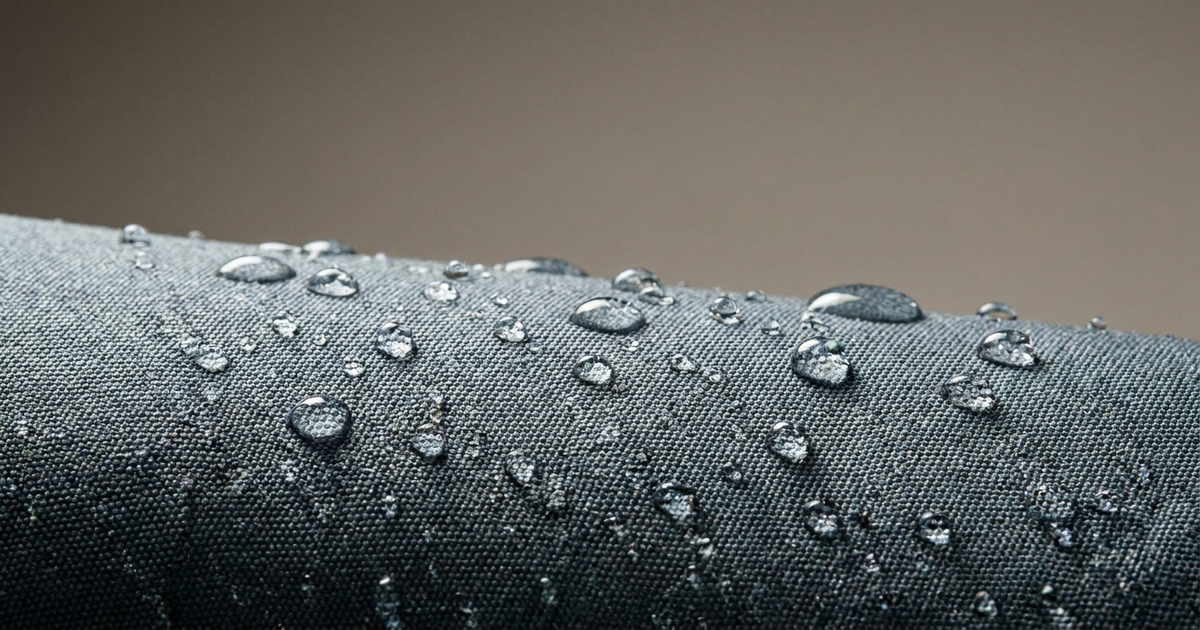
Same chemistry, same trade-offs. A backpack's water-resistant shell is usually the same class of DWR coating as a rain jacket's face fabric, just applied to a heavier fabric that gets less frequent washing — which means less frequent reproofing too. If you're shopping specifically for a bag with a verified PFAS-free finish, our PFAS-free backpacks guide covers which brands actually test clean rather than just market the claim.
Which option should you actually buy?
For a rain shell or outdoor jacket, an ePE-membrane product from a brand that discloses its DWR chemistry is the safest current bet — the waterproofing hasn't regressed, only the reproofing schedule has. For anything you can treat yourself, a silicone-based C0 spray like Nikwax TX.Direct or Granger's is the easiest maintenance path, and wax is worth considering for canvas bags and bike gear where stiffness doesn't matter. If you're buying a laptop bag rather than treating fabric yourself, our laptop backpack buying guide for students covers eco-certified options built with padding and durability in mind, not just the coating on the outside. None of these fully match the old fluorinated DWR for oil resistance yet — budget for reapplying sooner, not for finding a perfect drop-in replacement.
Transparency note: This article was researched and written by Chester Takau with AI assistance for research gathering and drafting. All recommendations reflect the author's own editorial judgment.
Related on TokMind: How to Get Teens to Care About Sustainability (Without the Lecture); Recycled Polyester vs Organic Cotton: Which Actually Wins in 2026?
Comments
Post a Comment